
Introduction: It’s One Visa, Two Purposes
If you’ve spent any time researching how to visit Vietnam, you’ve probably run into a confusing detail: the Vietnam Tourist Visa and the Vietnam Business Visa aren’t actually two different visas. They’re the same electronic visa — the Vietnam e-visa — with one difference: the purpose of entry you select when you apply. On the official government form, this appears as a dropdown field, with “Tourism” on one side and “Business Activities” on the other.
That single field matters more than it looks. It determines what activities you’re allowed to do in Vietnam, and picking the wrong one — even by accident — can create real problems at immigration. This guide breaks down exactly how to choose correctly, using common real-world travel situations, so you’re not guessing.
At Vietnam Visabox, we review applications for both purposes every day, and the most common question we get isn’t “what’s the difference in price” (there isn’t one) — it’s “which one actually applies to my trip.” Here’s how we walk travelers through that decision.
What the Purpose of Entry Actually Controls
When you apply for a Vietnam e-visa, the purpose you select isn’t just a label — it’s tied to what your visa authorizes you to do:
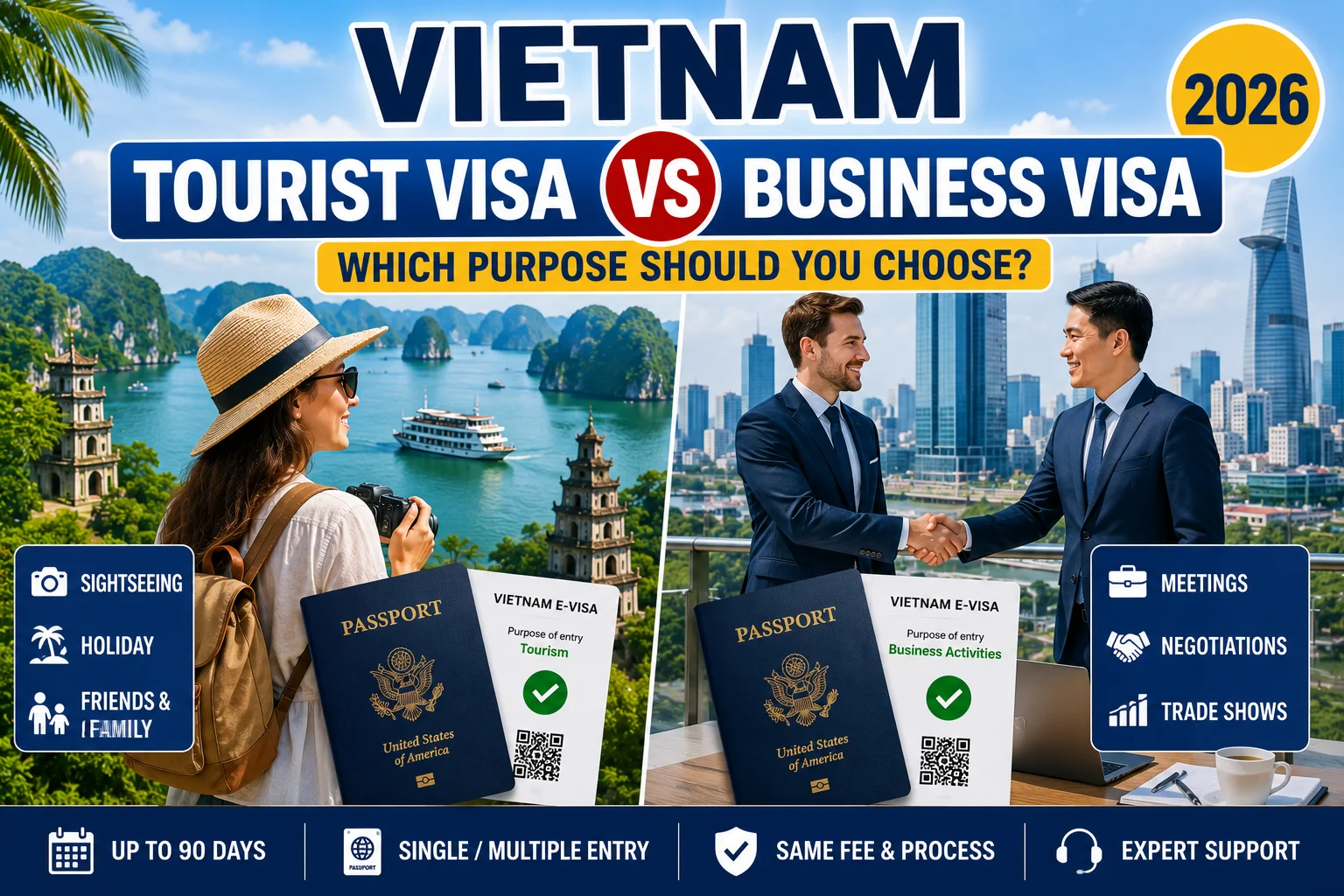
- Tourism purpose covers sightseeing, holidays, and visiting friends or family. It does not authorize any business activity.
- Business Activities purpose covers attending meetings, conferences, negotiations, and market research. It does not authorize paid employment in Vietnam under any circumstance.
Both purposes share the same underlying visa: up to 90 days validity, single or multiple entry options, the same government fee structure, and the same processing timeline. The cost and process are identical — only the intended activity differs. For the full requirements, processing times, and pricing shared by both purposes, see our Vietnam E-Visa page.
Vietnam Tourist Visa: Quick Recap
The Vietnam Tourist Visa is the e-visa applied for under the Tourism purpose. It’s the right selection if your trip is entirely about sightseeing, relaxing, or visiting people you know — with no meetings, conferences, or work-related activity involved.
Vietnam Business Visa: Quick Recap
The Vietnam Business Visa described on our site is the e-visa applied for under the Business Activities purpose. It’s the right selection for travelers attending meetings, conferences, or negotiations — and unlike the older, sponsor-based DN visa category, it doesn’t require an invitation letter from a Vietnamese company. It’s worth knowing that a business e-visa doesn’t restrict you to work activities only: sightseeing and downtime during the same trip are completely fine, since the purpose field reflects your primary reason for entry, not everything you do while there.
Side-by-Side Comparison
| Factor | Tourist Visa (Tourism purpose) | Business Visa (Business purpose) |
|---|---|---|
| What it’s for | Sightseeing, holidays, visiting friends/family | Meetings, conferences, negotiations, market research |
| Government fee | Same as business purpose | Same as tourist purpose |
| Validity | Up to 90 days, single or multiple entry | Up to 90 days, single or multiple entry |
| Invitation/sponsor letter required? | No | No (for the e-visa route — different from the sponsor-based DN visa) |
| Can you also sightsee? | Yes, that’s the whole point | Yes, alongside your business schedule |
| Can you attend business meetings? | No — this can cause issues at immigration | Yes |
| Can you work for pay? | No | No |
| Can you switch purpose after applying? | No — you’d need a new application | No — you’d need a new application |
How to Decide: Real Travel Scenarios
Rather than a generic rule, it’s often easier to recognize your own situation among common examples we see:
“I’m going for two weeks of sightseeing, no work involved.” → Tourism. Straightforward — this is exactly what the tourist purpose exists for.
“I’m flying in for a three-day conference, then flying home.” → Business Activities. Even a short, single-purpose business trip should use the correct entry category.
“I have a work trip, but I’m staying an extra week afterward to travel.” → Business Activities, for the whole trip. The purpose reflects your primary reason for entering the country — the extra vacation days afterward don’t require a separate visa or a second application, as long as you stay within your visa’s validity window.
“My company is sending me to scout potential suppliers and visit factories — no formal meetings scheduled.” → Business Activities. Market research and site visits fall under business purpose, even without a formal meeting on the calendar.
“I’m a digital nomad working remotely for a company outside Vietnam, and I’ll be in the country a few weeks.” → This is genuinely one of the gray areas. If you’re not being paid by a Vietnamese entity and not conducting local business activities, most travelers in this situation select Tourism, since remote work for a foreign employer isn’t the same as working in Vietnam. That said, this is worth a direct conversation with a specialist before you apply, since individual circumstances vary.
“I’m attending my company’s regional meeting, and my spouse is joining me for the trip.” → Business Activities for you, Tourism for your spouse — each traveler applies individually under the purpose that matches their own reason for the trip.
“I run my own company and I’m coming to explore whether Vietnam is a good place to set up an office.” → Business Activities. Exploring a potential business opportunity falls under this purpose, even without a formal client or partner already lined up.
What Happens If You Pick the Wrong Purpose
This is where the stakes become real. If you enter Vietnam on a Tourist Visa and immigration officers determine you’re actually engaged in business activity — attending meetings, signing contracts, or working on-site — this can create complications, since your entry documentation won’t match your actual activity in the country. The safest approach is always to select the purpose that genuinely reflects your trip, rather than choosing Tourism because it feels simpler.
If your circumstances are mixed or unclear, it’s worth a quick check with a specialist before applying rather than guessing.
A Quick Note on the DN Visa
You may also come across the term “DN visa” while researching business travel to Vietnam. This is a separate, older visa category that requires a Vietnamese company to formally sponsor your visa with an invitation letter, and is typically used for longer-term or more formal business arrangements. It’s a different application process from the e-visa system described in this guide. If your situation seems to call for a sponsor-based visa rather than the e-visa Business purpose, that falls outside the scope of what our e-visa service covers — worth clarifying with your host company or a corporate immigration specialist.
Frequently Asked Questions
1. Is a tourist visa cheaper than a business visa? No. The government fee and service pricing are identical — only the intended activity differs between the two purposes.
2. Can I change my purpose after I’ve already applied? No. If your trip’s purpose changes, or you realize you selected the wrong one, you’ll need to submit a new application under the correct purpose.
3. Can I do some sightseeing on a business visa? Yes. The purpose field reflects your primary reason for entry, not a restriction on everything you do during the trip — leisure time alongside a business schedule is fine.
4. Can I attend a business meeting on a tourist visa if it’s just one meeting? This isn’t recommended. Even a single meeting is a business activity, and entering on the wrong purpose can cause issues if it comes up at immigration.
5. Do I need a sponsor letter for the business e-visa? No — that’s only required for the separate, traditional DN visa category. The e-visa Business Activities purpose doesn’t require an invitation letter.
6. What purpose should digital nomads select? Most travelers working remotely for a company outside Vietnam, without local business activity, select Tourism — but this depends on individual circumstances and is worth confirming directly.
7. Do family members traveling with a business traveler need business visas too? No — each traveler applies under the purpose that matches their own reason for the trip. A business traveler’s accompanying family typically applies under Tourism.
8. How long is either visa valid for? Both purposes share the same visa structure: up to 90 days, with single or multiple entry options.
9. Can I extend either visa while in Vietnam? No, e-visas under either purpose cannot currently be extended in-country. Travelers needing more time typically exit and reapply, or convert to a different visa category if eligible.
10. Who should I ask if I’m still not sure which purpose fits my trip? If your situation doesn’t clearly match the scenarios above, it’s worth messaging a visa specialist directly before applying rather than guessing — getting the purpose right the first time avoids complications later.
Still Not Sure Which One Fits Your Trip?
Choosing the right purpose matters more than most travelers realize — and it costs nothing extra to get it right. Send our team your trip details, and we’ll help you confirm whether Tourism or Business Activities is the correct selection before you apply.
👉 Message us on WhatsApp or by email
Ready to apply? Visit our Vietnam Tourist Visa or Vietnam Business Visa page, or see the full Vietnam E-Visa guide for complete requirements, pricing, and the application process.
This article is for general informational purposes and reflects publicly available guidance current at the time of writing. Immigration requirements can change; always confirm current details before applying.
